
In early 2025, an Indigenous patient from Southern Mexico gave birth at Ventura County Medical Center. In the days that followed, her concern grew.
Her hospital room was a constant hub of activity, clinicians moving in and out. Equipment was wheeled away and replaced as the medical team kept vigilant watch over her fragile newborn.
The patient wondered, I’m not sure what’s happening. How worried should I be? But I don’t want to appear ungrateful. She nodded deferentially when the medical team spoke to her in Spanish, answering questions politely but briefly.
The patient did not understand all the words they were using or some of the interventions being discussed because Spanish—spoken through a bilingual interpreter, documented in her chart, and which she spoke up to a point—was not her primary language. Hers was Mixteco, an Indigenous language with no word-for-word direct Spanish or English translation for most medical terms, without a written form, and its own cultural cues.
Then a Mixteco–Spanish–English interpreter entered the room, greeted her warmly in Mixteco, and sat by her side. The patient began to cry. She was instantly relieved to have someone who spoke her language and understood her culture.
For Ventura County Medical Center (VCMC), the moment marked a meaningful milestone. Before 2025, trilingual language support was accessible through phone-based interpreter services and bilingual and trilingual staff, depending on availability. Now, a dedicated team of in-person Mixteco–Spanish–English interpreters make that support reliable for patients and providers in the moment and consistent over time.
Back in the room, everything shifted. The trilingual interpreter talked the patient through what her medical team had been trying to convey, outlining the risks and benefits, the decisions ahead, and what they were eager to hear and learn from her. What did she think? How did she feel? What did she want?
For the first time, the patient was able to have a clear picture of her and her baby’s situation. Although it was still worrisome, she could more thoroughly grasp her options. She started to open up, asking questions, voicing concerns, and discussing what mattered to her and her family.
After days of numerous conversations in Spanish where the dots never quite connected, a plan quickly started to take shape, and the patient’s confidence in her care and team grew, as she was connected with an in-person Mixteco interpreter.
Today, VCMC’s new team of in-person Mixteco–Spanish–English interpreters is part of a recently launched Department of Language Access and Interpreter Services. By hiring and embedding these interpreters directly into care teams for the first time, the health system is strengthening language equity and culturally responsive care for patients who need communication support.
From equity hypothesis to concrete help
For VCMC, this story underscored a clinically consequential equity problem first targeted in 2022, when it joined the California Health Care Safety Net Institute’s (SNI) Equity Community of Practice (CoP). The collaborative brings together leaders from 13 public health care systems across California to learn from experts and each other about new strategies to embed equity in all aspects of care and decrease disparities.
“This data really validates our approach that Spanish alone is not enough and investing in Mixteco-Spanish-English pathways is essential, along with continuing training of our qualified interpreters, for equitable care.”
- Jorge Mejia, Director of Language Access and Interpreter Services, Ventura County Medical Center
Because the CoP encouraged members to focus on one equity area, VCMC chose to look more closely at its severe maternal morbidity data. The health system found that non-U.S.-born Hispanic patients, particularly those who speak Mixteco as their primary language and many of whom are farmworkers, were experiencing worse maternal outcomes than other patient groups.
That confirmed what VCMC clinicians had suspected: language and culture were not side issues—they were central to safety during pregnancy and childbirth.
The health system then reviewed research showing that when the birth process aligns with a patient’s culture, they feel more understood, listened to, and connected to their care team, which fosters a greater sense of belonging. In turn, patients are more likely to express concerns if something does not feel right with their pregnancy.
Based on this, VCMC refined a hypothesis: patients who experience greater belonging during prenatal care will have better maternal outcomes.
To act on that hypothesis, VCMC knew it needed structural changes to support language access and cultural alignment. That insight became the foundation for designing those changes.
Dr. Minako Watabe, chief medical officer of VCMC and Santa Paula Hospital, turned to another peer system in the CoP that serves a similar Indigenous patient population and was further along in meeting patients’ language and cultural needs: Natividad Medical Center in Monterey County.
Natividad shared with Dr. Watabe what it took to build a trilingual interpreter program, including recruiting for interpreter roles and creating a formal pathway for staff to become qualified interpreters.
As VCMC learned from Natividad’s experience, Jorge Mejia, then one of Natividad’s licensed trainers for interpreters, completed a language needs assessment for VCMC. He later joined VCMC, spearheading its new Department of Language Access and Interpreter Services.
“The external perspective of SNI’s Equity Community of Practice was invaluable in shaping our Department of Language Access from the ground up,” he said.
Trilingual interpreters: embedded, not dispatched
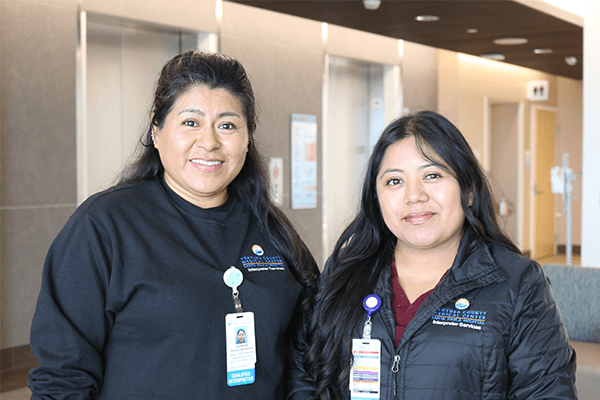
VCMC established its Department of Language Access in early 2025, hiring two trilingual interpreters on the Women and Children’s second floor — Heriberta Gomez and Maribel Rojas — and two part-time trilingual interpreters, one in the emergency department and one in surgery.
Although most health systems dispatch interpreters hospital-wide from a central hub, VCMC chose a different approach. Mejia embedded the two Mixteco–Spanish–English interpreters in the Labor and Delivery and Neonatal Intensive Care units so they could, as he put it, “not just be interpreters but part of the teams and grow with them.”
By dedicating these trilingual interpreters to the second floor, they could learn unit-specific terminology and workflows, anticipate patient and staff needs, and understand the ebb and flow of the floor.
To build that depth quickly, Mejia initially paired the interpreters to increase visibility. Within weeks, Gomez and Rojas became familiar faces and trusted members of the perinatal and pediatric teams. Staff began asking for them by name.
Since the interpreters became part of these teams, early feedback from clinicians points to more in-the-moment engagement from Indigenous families, fewer repeat explanations and less backtracking, and smoother care progression.
This aligns with recent research showing that embedding in-person interpreters with care teams improves communication with Indigenous patients and families and increases interpreter use. Early utilization data at VCMC began to mirror these findings.
“Spanish alone is not enough”
In the first few months after VCMC added trilingual interpreters, the hospital logged more than 3,500 in-person interpreter sessions. This early encounter data revealed that nearly one in four in-person interpreter sessions were in an Indigenous language (95% Mixteco), even though fewer than 2.8% of the health system’s patients list Mixteco as their primary language.
“Seeing it quantified at that scale was eye-opening but not completely surprising,” said Mejia.
He cited several factors: Indigenous patients’ deeper linguistic and cultural barriers, the misclassification of primary language (many are recorded as “Spanish”), and the limited Spanish proficiency (LSP) effect, where patients have partial Spanish comprehension but struggle with medical terminology.
“This data really validates our approach that Spanish alone is not enough and investing in Mixteco-Spanish-English pathways is essential, along with continuing training of our qualified interpreters, for equitable care.”
The data also point to a predictable, concentrated patient demand that requires year-round, stable staffing. The department is currently supported by grants from the Health Care Foundation for Ventura County, but as an ongoing cost of doing business, “the end goal is to bring Language Access into the county budget,” said Mejia.
Natividad offers a precedent: its Department of Language Access Services started off grant-supported before moving under the county’s operating budget.
Bilingual staff step up as qualified interpreters
With only a small pool of trilingual interpreters, VCMC chose to focus on an existing resource to further meet patients’ language and cultural needs: bilingual staff. About 35% of bilingual staff were already interpreting in Spanish, according to a staff survey in early 2025.
By internally training bilingual staff to become qualified interpreters for Spanish, the department could reserve trilingual interpreters for Indigenous language encounters, where both linguistic and cultural gaps are greatest. This approach also made financial sense, building internal capacity rather than relying solely on hiring new staff.
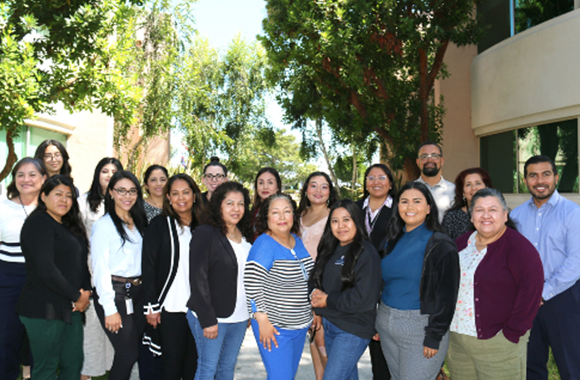
In 2025, Mejia, who had previously led interpreter training at Natividad, started to invite VCMC staff (and select county employees) to a three-week, 40-hour, standards-based course. The objective: put bilingual staff’s strengths to work so they can become qualified interpreters who practice safely and consistently, enabling equitable, high-quality care.
Interpreting at VCMC: By the numbers
35 percent of bilingual staff reported interpretation occurred using Spanish when Indigenous languages were needed (before the Department of Language Access launched)
1 in 4 in-person interpreter sessions were in an Indigenous language
3,500 in-person interpreter sessions provided in the first several months
40 hours of in-house, standards-based training for bilingual staff to become qualified interpreters
50 percent increase in participation from the first to the second interpreter training cohort
The course covers ethics, standards of practice, confidentiality, documentation, and modality of choice. Escalation to trilingual support is a particular focus to help ensure clinical information flows and cultural connections form early in the encounter. Mejia uses a flexible curriculum from Cross Cultural Communications that he adapts based on what bilingual staff tell him they need in their day-to-day interpreting challenges.
To date, staff who have completed the course include nurses, medical assistants, licensed vocational nurses, patient access and care coordinators, community health workers, and social workers across both ambulatory and inpatient settings. The in-person training meets one day in the first week and two days in each of the next two weeks.
At the end, participants receive an internal Qualified Interpreter designation for VCMC or county use. This is not a state or national certification and does not affect pay.
Since launching in 2025, two cohorts have completed the course, with 40 staff receiving the internal Qualified Interpreter designation. Demand doubled from cohort one to cohort two, signaling a culture shift, with staff interest climbing and momentum building.
Beyond strengthening participants’ skills and confidence to better support patients, the course deepens their understanding of what Mejia calls “communication equity.”
“Everyone I train becomes an advocate, helping others understand why dedicated, trained interpreters are essential for safe and equitable care,” Mejia said. “This helps create a culture that values consistency, quality, and respect for language access across the organization.”
VCMC’s advice for training bilingual staff to become qualified interpreters
- Start by engaging—not bypassing—your bilingual staff to expand your interpreter reach
- Train as many interested bilingual staff as you can
- Choose a flexible curriculum and tailor it to what staff say they need to support patients
- Be specific about modality and triggers, such as when to use phone/video and when to escalate to an in-person trilingual interpreter
- Find a cadence of training days and times that minimizes disruptions and be open to making changes
Although it is too early to see changes in maternal outcomes for Indigenous patients, VCMC is tracking both clinical measures and patients’ experiences with language, communication, and belonging during pregnancy and childbirth.
One result, however, is already clear: Indigenous patients and families are no longer navigating complex, high-stakes decisions alone.