
Changing structures to embed equity

In the fall of 2024, patients and community members from Alameda Health System’s Black Patient Care Initiative gathered at Wilma Chan Highland Hospital in Oakland, CA, to set the vision and messaging for an outreach campaign. They envisioned a campaign that would inspire more Black patients to be screened for cancer at the public health care system.
But their development of the culturally informed campaign went beyond brainstorming the tagline to deciding on the images. On the day of the campaign’s shoot, they wanted their community to be shown in a way that was beautiful and body-positive.
“Working with this team of Black creatives, patients, community members, and Alameda Health System staff, we created a campaign by, for, and about Black folks,” said Denise Jenkins, community member and Black Patient Care Initiative (BPCI) participant.
Her words capture part of a profound shift at Alameda Health System (AHS). Patients and community members were no longer just sharing feedback; instead, they were sharing decision-making power over the campaign’s design with the health system. The result, as U. Mini B. Swift, MD, Chief Mission Integration Officer at AHS, put it, was a structural change and a campaign “based on exactly what they wanted.”
Through the Black Patient Care Initiative (BPCI), the health system piloted this novel approach to center patient voices. With a focus on developing a cancer screening campaign, AHS gave BPCI’s patients and community members co-design and co-decision-making authority, weighted their votes, and ensured they had the final say on matters related to patient experience.
Swift and her colleague Angela Ng, MD, Director of Care Experience at AHS, saw the approach as a way to build the system’s trust with Black patients and community members, improve care, and ultimately embed these co-design and co-decision-making powers within permanent structures such as AHS’ Patient and Family Advisory Council.
Stubborn lack of progress
Earlier that year, Swift, Ng, and others at AHS reviewed quality measure data showing that Black patients continued to be screened for breast, cervical, and colorectal cancers below the system’s improvement targets.
Over the years, AHS tried multiple approaches to increase screening, including following a well-regarded quality improvement (QI) playbook of clinical best practices and interventions shaped by patient feedback. For a health system deeply committed to equity, it was frustrating that screening rates for all populations were not increasing at the same rate, despite longstanding and concerted efforts.
Learning with peers
What became clear to AHS was that if they were going to encourage more Black patients to get screened for cancer, they would need an approach that invited patients and community members into the design process at the earliest stage. This approach felt ambitious, with the greatest potential for transformation and sustainability.
At the time, Swift and her colleagues were participating in the California Health Care Safety Net Institute’s (SNI) Equity Community of Practice. Since 2022, this collaborative has brought together health system leaders from more than 13 public health care systems across California. They meet to learn from experts and each other about new strategies to embed equity in all aspects of care and reduce disparities.
Through this work, AHS learned about targeted universalism, an approach that sets a universal goal for everyone but focuses first on the patients facing the highest barriers. Instead of comparing Black patients to other groups, the system measured progress against that shared goal, recognizing that solutions developed this way could benefit all patients. This lens helped clarify where system barriers remained and reinforced the need for a deeper, equity-centered redesign of how improvement work was structured.
Patients at the center
As part of SNI’s Equity Community of Practice, AHS was also introduced to an equity-centered framework for quality improvement: liberatory design. Developed and shared by SNI’s partner, the National Equity Project (NEP), liberatory design calls for centering those most impacted by the problem.
Unlike many QI efforts, such as the plan-do-study-act (PDSA) cycle, that start with practitioners and staff defining the challenge and solutions, liberatory design takes a different tack. It treats patients and community members closest to the harm as those best positioned to clarify the problem and co-design the response while prioritizing the development of trust and strong relationships.
For AHS leaders, these liberatory design principles, especially “designing with” instead of “designing for” patients, resonated immediately. In the past, the system often first developed interventions internally and then asked its Patient and Family Advisory Council for their perspectives and input. That feedback informed the work, but it was largely reactive.
Instead, guided by liberatory design and coaching from NEP, the health system moved from asking patients, “What do you think of our work?” to “What do you think will work?” That shift came to life through the BPCI, originally established through a Pfizer grant. Swift described BPCI as a patient and family council focused on Black patients and community members.
What set BPCI apart, Swift said, was that based on liberatory design principles, it became “a structure where community partners could come to AHS and make decisions.” Members were also compensated for their time, reflecting AHS’ commitment to valuing their expertise.
A foundation for trust
But before BPCI members could explore potential causes and co-design ways to increase cancer screening rates in the Black community, the AHS team knew it first needed to “build relational trust”—a key liberatory design principle.
To help do that, they invited BPCI members behind the scenes for a newly designed, transparent tour of several AHS departments in the spring of 2024.
The purpose was not only for members to “see and engage” with the system, a liberatory design tenet, and learn how it operates. Another aim was to position members as equal partners prepared to make decisions later.
Guided by liberatory design’s principle of “share, don’t sell,” AHS chose transparency and depth over a surface-level view. During the tour, members met with staff who explained diagnostic workflows and patient pathways while acknowledging constraints and opportunities.
BPCI members also reviewed existing AHS strategies to increase cancer screening rates and engaged in candid conversations with staff about why Black patients might not be coming in for screenings.
This commitment to transparency extended further as AHS shared more information with BPCI members. Staff traced how the money flows within the system, reviewed its Quality Incentive Pool (QIP) dashboards side by side with members, and invited them to a QIP staff retreat. QIP is California’s value-based payment program for public health care systems.
These unique experiences deepened members’ understanding of AHS’ priorities and operations and increased their sense of being trusted as a partner. In the past, some members had told AHS that they felt like they were sitting on the outside of the system, which made this new level of engagement feel like a turning point.
“I had underestimated how impactful it would be to begin with the patient’s journey before reviewing data or even discussing the problem that we were trying to solve,” said Swift.
“Getting Screened for Life”
BPCI members’ new insights into the system, coupled with growing trust, made the next step possible: co-designing and sharing decision-making power with AHS. Initially focused on increasing screening for breast cancer, several members worked with the system’s Mammography Improvement Workgroup. They used their lived experience to help the workgroup identify ways to encourage more Black patients to get screened.
First, they believed an outreach campaign could encourage more patients to come in for screenings. AHS agreed.
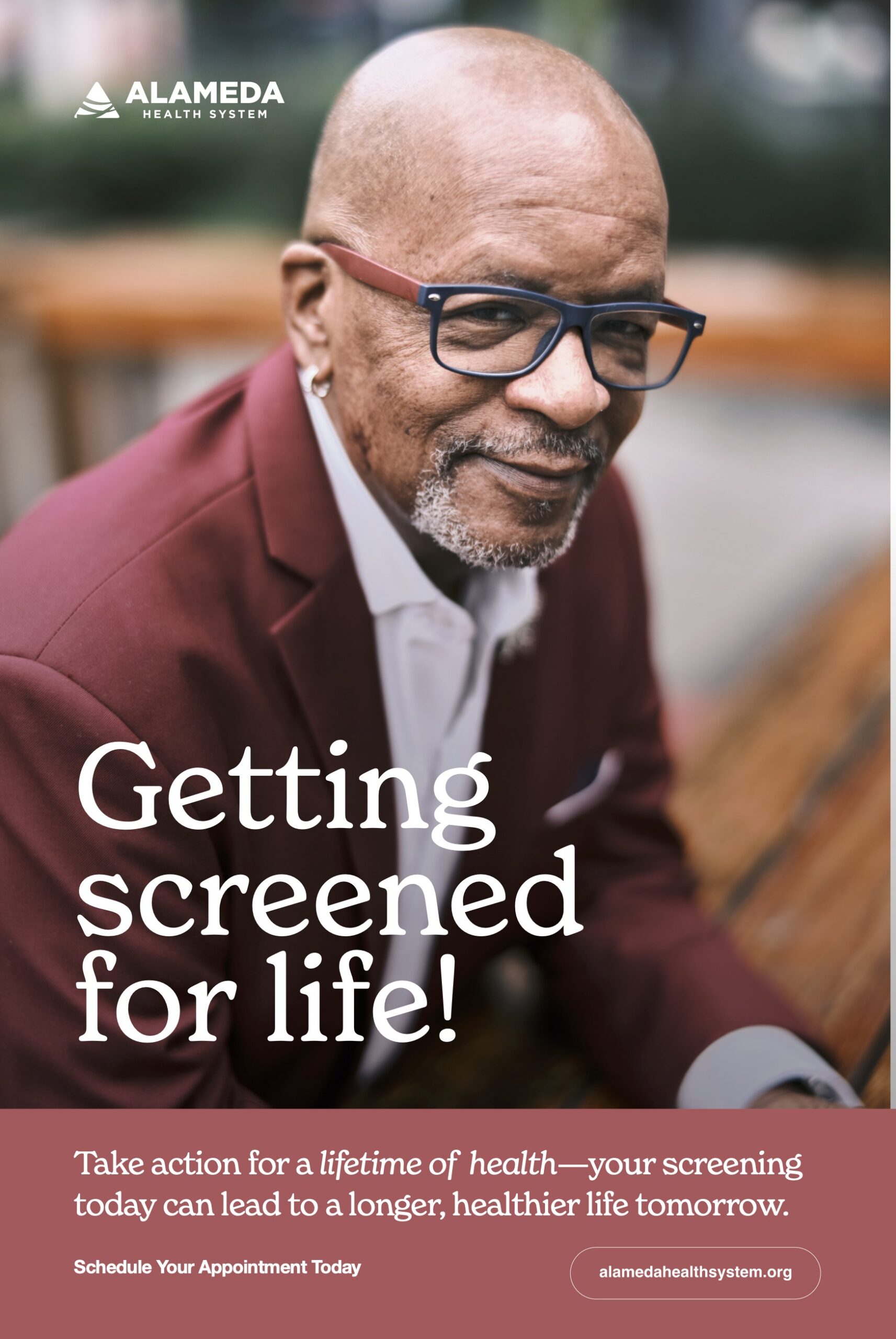
The outreach campaign “Getting Screened for Life” became an early demonstration of equity-centered quality improvement in practice. Instead of reviewing and providing feedback on AHS-chosen outreach efforts, BPCI set the direction from the start and guided both creative and production decisions throughout.
The campaign, which reframes screening as a life-affirming act of self-love, launched in spring 2025. It includes social media, outreach materials, and mailings. AHS also continues to collaborate with community partners to bring campaign flyers and brochures to local health fairs and events.
Testimonial from Denise Jenkins, community member and Black Patient Care Initiative participant
“Growing up Black in America, without being consciously aware, I got used to seeing Black folk being misrepresented, targeted, or completely ignored in media of the time. For example, newspapers darkened Black men’s faces trying to make them appear more frightening or criminal in crime reports. TV and magazine advertisements aggressively marketed menthol cigarettes in Black communities.
However, this campaign celebrates Black people with bold, high-energy photos showcasing individuals of diverse ages, genders, and body types. This campaign elevates Black people in their pursuit of a healthy life.
For me personally, working on this campaign has been unexpectedly healing, and the presentation of the final posters had my heart racing with emotions. I look forward to more work together!”
Next, BPCI members discussed everyday barriers that made screenings hard to access and identified opportunities to address them. For example, they suggested allowing patients to self-schedule mammograms and making it clearer that screenings were available at multiple AHS sites throughout Alameda County, not just the system’s most well-known facility: the Wilma Chan Highland Hospital Campus. Their input turned into concrete process improvements designed to make the experience easier for patients.
Ng reflected that these new ways of designing patient-driven interventions to tackle disparities did not emerge overnight. “Our multi-year journey with the National Equity Project and the Equity Community of Practice really allowed us to be in community with our patients—to try and co-design and to figure out how to share power and what that looks like.”
AHS advice for equity-centered quality improvement
- Listen to those most impacted—you do not need to have all the answers
- Build relationships and trust with patients and community before jointly defining problems and co-designing solutions
- Use targeted universalism to set one goal (e.g., higher screening for all), focus first where barriers are highest, and design fixes that benefit everyone
- Develop a “designing with” instead of “designing for” mindset, engaging patients and community members as equal partners from the start and throughout the process
- Consider giving more weight to patient or community input when voting on a decision
- Show patients and community members how the system works through detailed tours, process walk-throughs, data sharing, and inviting them to select internal meetings
Growing closer
Although it is too early to measure the impact of the campaign or the process changes on cancer screening rates for Black patients, AHS will be tracking outcomes in the months ahead. This includes not only screening rates but also patients’ experiences with access and follow-up.
One result, however, is already clear: AHS’ relationships with community members and local organizations have grown stronger.
“The trust AHS built with its Black patients didn’t come from a single event or initiative,” said Ng. “It was a quiet but profound shift—created through repeated engagement, transparency, and power-sharing—that made patients feel included as true partners.”
Institutionalizing co-design and co-decision-making
After the BPCI pilot, AHS embedded co-design and co-decision-making in its Patient and Family Advisory Council, making them a sustainable part of how the system operates. The council’s updated charter and procedures spell out how patients help set priorities, share in decisions, and monitor follow-through. Several BPCI members have also joined the council, so those most affected are at the table from the beginning
To further strengthen equity-centered quality improvement, Swift and Ng have been spreading liberatory design principles across the organization, from leadership to frontline staff. For example, patients are now included in staff training development, another practical way of bringing patients inside the system.
“Co-designing with patients is no longer treated as a special initiative,” said Ng. “It is becoming the foundation of excellent care.”